
Coping With the Loss of a Dog
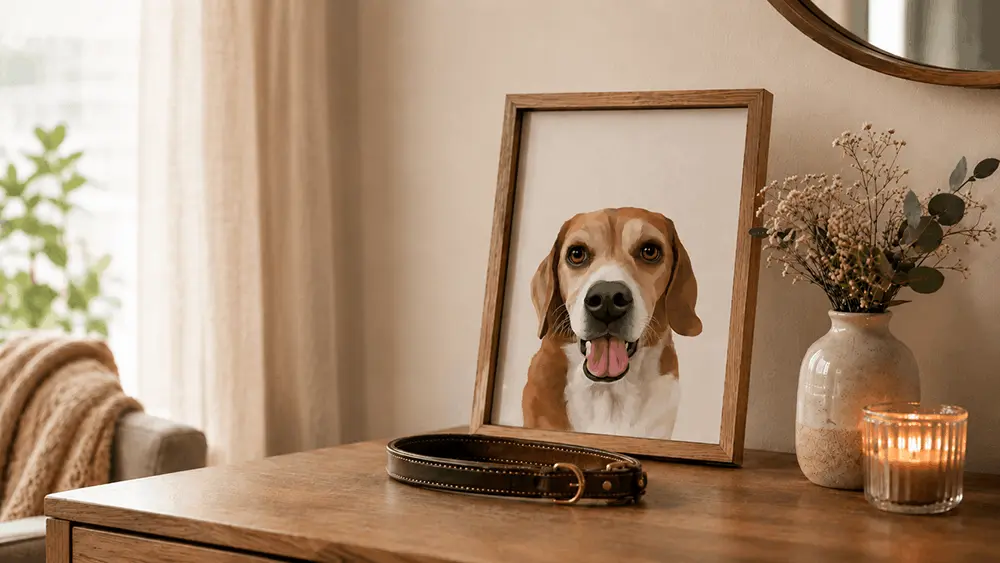
There is a strange kind of quiet that comes after losing a dog. Sometimes you notice it immediately, and sometimes it sneaks up on you in the middle of an ordinary day. Their bed is still in the corner. The leash is hanging where it always was. You walk into the kitchen and expect to hear paws behind you, or glance toward their favorite spot without even thinking about it. For a moment, your routine takes over before reality catches up.
That is part of what makes losing a dog so difficult to explain. You have not only lost a pet. You have lost a loyal friend, a familiar presence, and an animal companion who quietly became part of the shape of your everyday life. They were there for mornings, evenings, walks, errands, lazy afternoons, and all the small moments that rarely seemed important at the time. Somehow, they became woven into all of it.
Afterward, the house can simply feel different. Maybe it is quieter than you remember. Maybe mealtimes feel strange, or you still instinctively make room on the couch. You may feel sadness, anger, numbness, guilt, relief, loneliness, or several of those emotions within the same day. There is no single right way to experience pet loss, and there certainly is not a schedule you are supposed to follow.
For now, it may help to think less about moving on and more about coping with whatever each day brings. Keep gentle routines where they help. Leave your dog’s belongings where they are if you are not ready to move them. Look through photographs when you want to, and put them away when you do not. You might write down a favorite memory, create a small memorial, or simply give yourself permission to miss them without trying to make the feeling disappear.
Healing does not require forgetting your dog. In many ways, it is learning how to carry the relationship with you differently.
Why Does the Loss of a Dog Hurt So Much?
If you have ever caught yourself wondering why this hurts so much, you are not being dramatic. Dogs have a way of slipping into nearly every corner of ordinary life without us realizing how much space they have taken up. They become part of your daily life in ways that are easy to overlook until those routines are suddenly gone.
They are there while you make coffee, work from home, fold laundry, watch television, or walk around the neighborhood. They know which cupboard holds the treats and exactly what time dinner is supposed to happen. They recognize the sound of your car, the jingle of their leash, and sometimes even the mood you are in before anyone else does. None of those moments feels especially monumental while it is happening, but over the years, those ordinary moments become the relationship.
That is why the loss of a pet can leave such a noticeable absence. The bond you shared with your pet was not limited to birthdays, vacations, or the photographs saved on your phone. It lived in hundreds of small interactions that became so familiar you barely noticed them anymore. In that sense, animal loss can affect more than your emotions. It can change the way your home feels, the rhythm of your day, and even your self concept if being a dog owner was an important part of how you saw yourself.
Grief also has a way of bringing those moments back when you least expect it. You might hear another dog’s tags jingling and turn around automatically. You may find a forgotten toy underneath the couch months later, or walk through the front door and expect to see them waiting there. Sadness is obvious, but grief can also bring anger, guilt, loneliness, emptiness, or even relief if your dog had been suffering. These are all normal signs of grief after losing a beloved pet or animal companion.
The Grieving Process After Losing a Dog
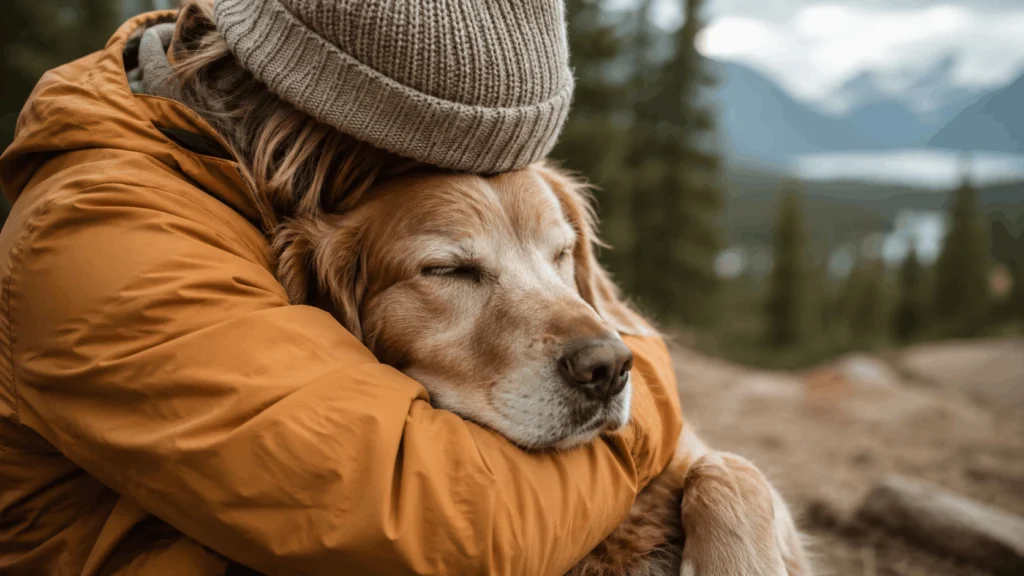
One of the frustrating things about grief is that it does not behave very neatly. You can wake up one morning and feel surprisingly okay, then hear a song or pass the park where you used to walk together and suddenly feel like you are right back at the beginning. That is often how the grieving process works. It can move forward, backward, sideways, and sometimes in several directions within the same week.
A photograph might make you smile one day and cry the next. A routine that once felt comforting may suddenly feel painful. You may want to talk about your dog constantly for a while, then reach a point where you need some distance from the memories. None of that means you are going backward. Grief is rarely a straight line, especially when the relationship you lost was part of your everyday life for years.
There also is not a set timeline for how long any of this is supposed to last. Some people want to look through photographs immediately. Others cannot bring themselves to open a photo album for months. Some leave the bed, bowls, toys, and leash exactly where they were, while others need to put things away because seeing them hurts too much. People cope with the loss differently because every relationship was different to begin with.
There Is No Set Timeline
At some point, someone may tell you that it is time to move on. They may mean well, but grief does not really work according to someone else’s calendar. Your relationship with your dog was unique, and the way you mourn that relationship will be unique too.
Maybe you brought them home as a puppy and watched their muzzle slowly turn gray. Maybe they entered your life during a difficult year and became the steady presence you needed. Maybe they were simply the dog who made your house feel more like home. Whatever your story was, you are allowed to mourn it fully without comparing your timeline to anyone else’s.
You also do not need to make every practical decision right away. If their bed is still sitting in the corner and moving it feels impossible, leave it there. If seeing the leash every morning is painful, put it somewhere safe for now. Take small steps and let your home change gradually. Your routines will evolve over time, but they do not have to change all at once.
Honor Every Emotion
Grief can be messy because emotions do not always arrive one at a time. You may be devastated and grateful at the same time. You may feel angry that your dog did not get more years. If they were sick, you may feel relief that they are no longer suffering and then immediately feel guilty for feeling relieved. Those emotions can exist together without one canceling out the other.
If you are not sure what to do with everything you are feeling, a few gentle ways to process those emotions can help:
- Write your dog a letter when there are things you still want to say.
- Look through photographs when remembering feels comforting.
- Talk about funny, strange, or completely ordinary memories.
- Create a small place in your home for the memory of your pet.
- Name exactly what you miss, such as your morning walks or the sound of their paws.
- Give yourself permission to laugh when a memory is funny, even if you were crying five minutes earlier.
You do not have to push sadness away to prove you are strong. You also do not need to feel guilty when a memory makes you smile. Honoring every emotion means making room for the love as well as the sorrow.
Be Patient With Yourself
There will probably be days that catch you off guard. Maybe you are doing fine until you see their bowl. Maybe another dog barks in a familiar way. Maybe you walk past their favorite patch of grass and suddenly have to stop for a minute. Grief has a habit of showing up in places you did not expect.
Those moments often become less constant over time, although certain memories may always carry some emotion. For now, let it unfold honestly. You do not need to rush yourself into feeling better, and you certainly do not need to prove to anyone that you are moving on.
Handle Daily Routines After Your Dog Dies
It is often the routine that makes the absence feel especially real. For years, you may have structured parts of your day around your dog without thinking much about it. Wake up, let them outside, fill the bowl, take the morning walk, check whether you are running low on treats, and make sure you are home in time for dinner. Those small responsibilities become automatic.
Then suddenly, they disappear. You may still wake up at the same time or instinctively reach for the food bowl. You might listen for the missing sound of paws in the hallway before remembering there is no one coming. These moments can be surprisingly painful because they reveal just how deeply your dog was built into the rhythm of your day.
Face the Empty Routines
Sometimes it is the quiet parts that feel hardest. The morning walk is gone. There is no dinner to prepare. The place beside you on the couch stays empty. You do not need to rush to fill those spaces, but giving your day a little shape can help.
A few small adjustments may make the transition feel less abrupt:
- Keep taking a short walk around the time you once walked your dog.
- Call a friend during the part of the evening that suddenly feels too quiet.
- Make breakfast and open the blinds even when you do not feel particularly motivated.
- Spend a few minutes outside if being indoors makes the silence feel heavier.
- Keep one familiar routine from your old schedule if it still brings comfort.
None of these things will replace your dog, and they are not supposed to. They simply give the day some structure while everything else feels unfamiliar.
Create Gentle Structure
Think small here. You do not need a dramatic reinvention of your life. A gentle plan might simply mean waking up around the same time, eating regular meals, going outside for a few minutes, taking a walk, or giving yourself something simple to look forward to.
Some people also find comfort in reshaping an old routine rather than abandoning it completely. The time you once spent preparing your dog’s dinner might become a few quiet minutes looking through photographs. Your old morning walking route may eventually become a place where you remember them. Basic self care matters too, even when it does not feel especially important. Sleep, meals, movement, hobbies, and time with supportive people can help give your days a little steadiness.
Creating new routines does not replace your dog. It simply helps your life begin to feel manageable again.
Adjust Daily Reminders Slowly
There is no deadline for deciding what should stay and what should go. Some belongings may comfort you, while others might make the house feel painfully empty. What feels comforting today may feel difficult next month, and something you cannot look at now may eventually become one of your favorite reminders of them.
You might try:
- Changing your walking route if the old one feels too painful.
- Creating a digital album of favorite photographs.
- Setting aside a few minutes each day to remember your dog.
- Keeping healthy routines around sleep, meals, and exercise.
- Spending time with friends or family when the house feels especially quiet.
- Helping another animal when you eventually feel ready.
The goal is not to erase reminders. It is to slowly figure out which ones you want to carry with you.
Decide What To Do With Your Dog’s Things
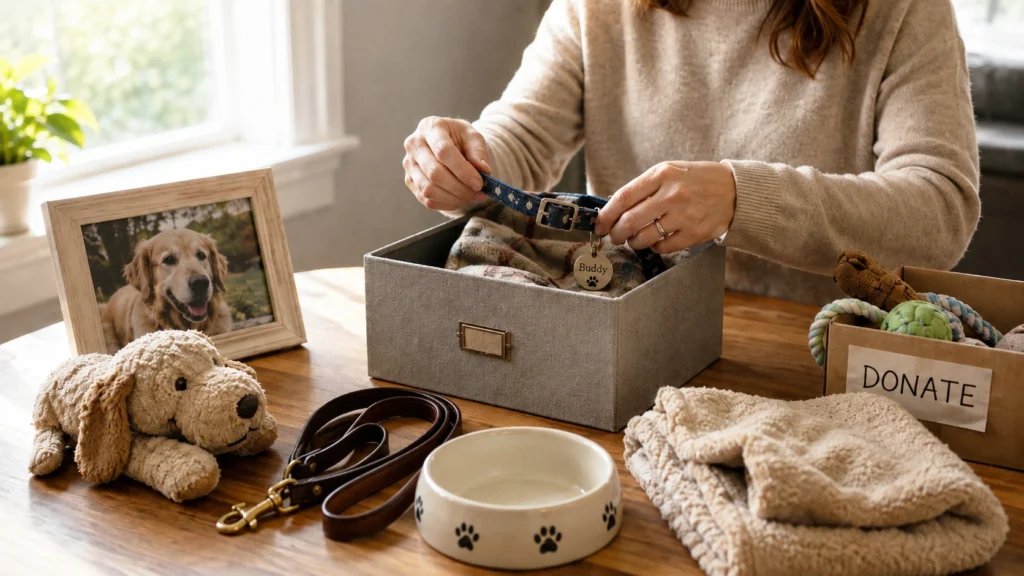
This is one of those tasks that can sound simple until you actually try to do it. A collar is just a collar until it is their collar. A worn out toy might look ready for the trash to anyone else, but you remember exactly how excited they became every time you picked it up. A blanket may still be folded in the same place it always was, and suddenly moving it feels much harder than you expected.
For a pet owner, these ordinary objects can hold years of memories. That is why there is no reason to rush through them or pressure yourself into making decisions before you are ready. If it helps, you can think about your dog’s belongings in a few simple categories:
- Keep: Save a collar, tag, favorite toy, photograph, blanket, or anything else that feels especially meaningful.
- Store for later: Put things you are unsure about into a special box so you do not have to decide right now.
- Donate: Gently used beds, bowls, leashes, blankets, and toys may be useful to a local shelter or rescue.
- Share: If family members were close to your dog, you might offer them a photograph, tag, or another small keepsake.
- Ask for help: If sorting through everything feels overwhelming, invite someone you trust to sit with you while you do it.
Some people find comfort in donating belongings because it gives those things another purpose. Others keep everything for months or even years before deciding what feels right. Neither approach is more correct. The point is to give yourself enough room to decide when you actually feel ready.
Create Gentle Ways To Remember Your Dog
Remembering your dog does not have to mean creating something formal or somber. In fact, the things that feel most meaningful are often surprisingly ordinary. Maybe it is a photograph where their ears look ridiculous, a tag that jingled every time they walked into the room, or a toy they refused to give up even after it was barely recognizable.
Those are the details that made your dog your dog, and they are often the memories that eventually bring the most comfort. You do not need a grand memorial to honor the relationship. Something small and personal can mean just as much.
A few ideas that may feel meaningful include:
- Planting a tree or flowers in a favorite spot.
- Writing a letter about everything you loved about your dog.
- Creating a memory box with their collar, tag, toy, or blanket.
- Putting together a photo book filled with everyday memories.
- Framing a favorite photograph somewhere in your home.
- Donating to a shelter or rescue in your dog’s name.
- Inviting family members or friends to share their favorite stories.
- Creating a custom piece of artwork inspired by your dog.
A memorial does not have to focus only on sadness. It can celebrate the weird habits, goofy expressions, favorite toys, and small routines that made your relationship special.
For some families, a symbolic tribute such as an over the rainbow custom pet portrait can create a lasting reminder of the relationship they shared with their pet. Whatever you choose, let it feel like your dog rather than something you think grief is supposed to look like.
Find Pet Loss Support When You Need It
One of the loneliest parts of pet loss can be realizing that not everyone understands it. Someone who has never had that kind of relationship with an animal may genuinely care about you and still not quite understand why the grief runs so deep. You may even start wondering whether you should stop talking about your dog because you worry other people think enough time has passed.
That is why talking to someone who does understand can be such a relief. Start with people who knew your dog and respected the bond you had. Tell stories, talk about the funny things they did, and say their name. Sometimes having someone else remember them with you makes the loss feel a little less lonely.
Support can take several forms depending on what feels comfortable:
- Friends and family: Especially people who knew your dog and understand what they meant to you.
- Pet loss support groups: These can provide a space where you do not have to explain why the grief feels significant.
- Veterinary resources: Some veterinary practices and animal hospitals offer bereavement information or referrals.
- Humane organizations and community groups: Local organizations sometimes host pet loss groups or memorial resources.
- Therapy: A licensed mental health professional can help if grief begins to feel overwhelming or difficult to manage alone.
For some people, anxiety or changes in mental health can show up alongside grief. You may feel restless, have trouble sleeping, worry more than usual, or find it difficult to concentrate. If grief begins consistently interfering with sleeping, eating, working, relationships, or getting through everyday life, reaching out for professional support may help.
Persistent grief can sometimes overlap with symptoms associated with conditions such as major depressive disorder, but that is something a qualified professional should evaluate. The important thing is not to diagnose yourself based on a difficult week. It is to notice when sadness or anxiety feels unmanageable and give yourself permission to ask for help.
Helping Children Cope With the Loss of a Dog
For a child, losing a dog may be their first real encounter with death, and they may not process it in the way adults expect. One minute they might be crying and asking difficult questions, and twenty minutes later they may be playing normally or laughing at something completely unrelated. That does not mean they have forgotten or do not care.
When you talk about what happened, try to use clear, age appropriate language. Phrases like “went to sleep” can be confusing for younger children, who may interpret them literally. Give them permission to ask questions, even if they repeat the same one several times. Children often revisit difficult ideas as they slowly begin to understand them.
It can also help to give children a way to participate in remembering the dog. Depending on their age, they might:
- Draw a picture of their favorite memory.
- Choose photographs for a scrapbook or photo album.
- Write a letter or short story about the dog.
- Pick something meaningful for a memory box.
- Help plant a flower or small tree in the dog’s honor.
- Choose a photograph to frame in their room.
- Talk about one funny or happy memory during family meals.
Most importantly, make it clear that your dog is not a forbidden topic now. Letting children talk openly about the dog, including the funny memories as well as the sad ones, can make grief feel less mysterious and give them a safer way to express what they miss.
Adjust To Life Without Being Your Dog’s Person
There is another part of losing a dog that people do not talk about as often, and that is how much you can miss the role you had in their life. For years, you were their person. You filled the bowl, bought the treats, scheduled veterinary appointments, took the walks, and knew exactly where they liked to be scratched. Your days were shaped in dozens of small ways around caring for another life.
When those responsibilities suddenly disappear, the days can feel strangely empty in a way that goes beyond missing your dog. Caring for them may have become part of your routine and even your self concept, so it can take time to understand what everyday life looks like without that role.
Eventually, you may begin reshaping your day in ways that feel natural. Maybe you keep taking the morning walk alone because being outside still feels good. Maybe your schedule changes, you rediscover a hobby, spend more time with friends, or simply get used to having a little more unstructured time. There is no need to fill every empty hour immediately.
As the weeks and months pass, the way you remember your dog may begin to change too. The final days may stop taking up quite so much space, while older memories start coming back more easily. Muddy paws after a rainy walk, the sound of their tags, the strange sleeping position they somehow found comfortable, or the look they gave you when they wanted a treat may start to feel more vivid again.
Those ordinary memories matter because love doesn’t disappear simply because the daily care routine has ended. The relationship changes, but what your dog meant to you remains part of your life.
Consider Another Dog Only When You Feel Ready
Sooner or later, someone may ask whether you are going to get another dog. You do not have to know the answer, and there is no universal right amount of time to wait before welcoming another pet into your life.
Some people find that caring for another animal brings comfort relatively soon. Others need months or years before the idea feels right. Some eventually decide they do not want another dog at all. None of those choices says anything about how much you loved the dog you lost.
If the possibility does begin to feel right, it may help to ask yourself a few questions:
- Does the idea of getting to know a completely new dog feel exciting?
- Do you have the time and emotional energy to care for another animal right now?
- Are you comfortable with the new dog having a completely different personality and routine?
- Are you hoping for a new relationship, or trying to recreate the exact relationship you lost?
- Would waiting a little longer feel better?
A new dog can bring an incredible amount of joy, but they will not be a replacement for your beloved pet, and they should not have to be. They will be someone new, with their own personality, habits, preferences, and place in your life.
When the time is right, that relationship can exist alongside the love you still have for the dog who came before. Loving another animal does not mean loving the one you lost any less.
Frequently Asked Questions
How Long Does It Take to Get Over the Loss of a Dog?
There really is not a finish line. You may actively grieve for weeks, months, or longer, and certain memories may still catch you years later. What often changes is the weight of the grief. Over time, it usually becomes easier to carry, even while the memory of your pet remains important.
Why Does Losing a Pet Hurt So Much?
Pets rarely stay just pets. They become part of our homes, routines, relationships, and sense of comfort. Losing an animal companion can mean losing someone you loved while also losing an entire set of familiar everyday rituals, which is why the absence can feel so intense.
Is It Okay to Mourn the Loss of a Pet?
Absolutely. The loss of a pet is a genuine loss, and you are allowed to mourn the relationship in whatever way feels right to you. There is no need to minimize your grief simply because the loved one you lost happened to have four legs instead of two.
What Does God Say About Losing a Pet?
People find comfort in different places, and religious beliefs about animals and the afterlife vary widely. For some people, prayer, spiritual traditions, or the belief that the love they shared with their pet continues to have meaning can be deeply comforting. If faith is important to you, speaking with a trusted spiritual leader may also provide a place to talk openly about your loss.
How Do I Stop Feeling Guilty About My Dog’s Death?
Guilt is incredibly common after losing a dog, especially when illness or difficult end of life decisions were involved. Your mind may replay certain moments and wonder whether you should have noticed something sooner, made a different decision, or somehow done more.
When you can, try to zoom out from the final moments and remember the whole relationship. You made decisions with the information you had, the circumstances you were facing, and because you cared deeply about your dog. Writing them a letter, talking with someone who understands, or asking your veterinarian about lingering medical questions can sometimes help loosen some of that guilt.
How Can I Help a Friend Who Lost a Pet?
Start by listening. You do not need the perfect thing to say, and you definitely do not need to rush them toward getting another pet. Acknowledge how much their dog mattered, share a favorite memory, bring them a meal, send a photograph you have of their dog, or help them create a memorial if they want one.
It is also worth checking in again a few weeks later, after the initial messages from everyone else have started to slow down. Often, the kindest thing you can offer someone who is grieving is simply permission to keep talking about the animal they loved.